

The Nigeria Customs Service has raised concern over the growing pace and sophistication of international crime networks, warning that governments are struggling to keep up with threats that now cut across borders and sectors.
Speaking at the Defence Services Asia Exhibition and Conference 2026 in Kuala Lumpur, Malaysia, the Comptroller-General of Customs, Bashir Adewale Adeniyi, said current enforcement approaches are no longer adequate in the face of highly coordinated global criminal activity.
He noted that crimes such as drug trafficking, wildlife smuggling, financial fraud, and terrorism financing are no longer isolated incidents but part of interconnected networks operating on a global scale. According to him, fragmented national responses are proving ineffective against these evolving threats.
“Criminal networks are evolving faster than enforcement models,” Adeniyi said, calling for stronger intelligence sharing, joint operations, and deeper international cooperation.
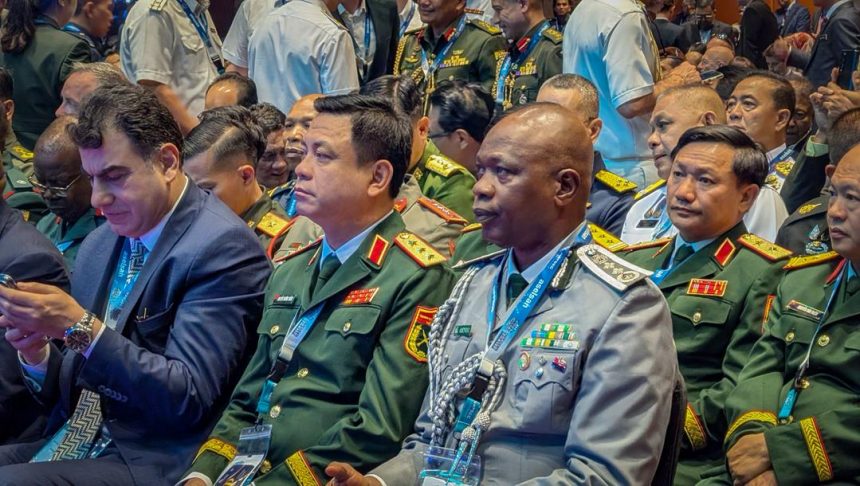
The conference, held at the Malaysia International Trade and Exhibition Centre and opened by Malaysian Prime Minister Anwar Ibrahim, brought together security leaders from 14 countries. The event featured over 1,400 exhibitors and key stakeholders in defence technology, electronic warfare, and homeland security.
Participants at a high-level session under the Asia Pacific Security Association Malaysia International Security Summit 2026 highlighted that enforcement agencies are increasingly constrained by outdated tools, limited manpower, and the rapid advancement of technology-driven crime.
Drawing from Nigeria’s experience, Adeniyi outlined a three-point strategy focused on deploying advanced technology, strengthening institutional collaboration, and investing in continuous capacity building. He stressed that modern systems must be matched with well-trained personnel to remain effective.
He also referenced frameworks developed by the World Customs Organization as essential for aligning global enforcement efforts, noting that criminal activities in one region can quickly spread across borders if left unchecked.



There was broad agreement among participants on the need for closer coordination between governments, private security firms, and international bodies such as INTERPOL.
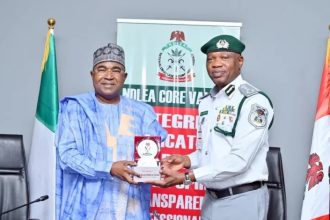
On the sidelines of the conference, Adeniyi engaged with counterparts from across Asia-Pacific and the Americas, reinforcing Nigeria’s commitment to stronger global security partnerships. His message was clear: only a unified international response can effectively match the speed and complexity of organised crime today.